Before the order goes in

Questions worth asking when the menu does not quite tell you enough

A card can only hold so many words. Whatever it left out is still in the room with you, and it belongs to the people carrying the plates.

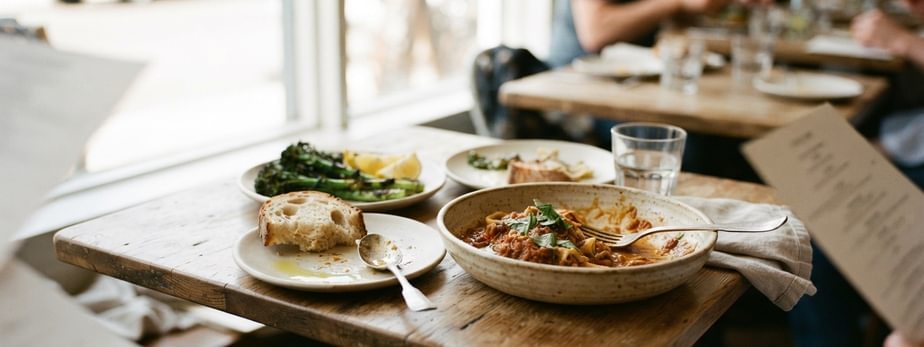
Several shared plates part way through a meal on a small table

Menus are written to be read fast, which means they are edited hard. How much food arrives, what turns up beside it, how much of the dish is fixed by the kitchen and how much is simply a matter of asking: a good deal of that never reaches the printed line, and no card could carry it all without turning into a manual.

So a short gap opens between reading the page and saying the words out loud, and the quickest way across it is a question with one clear thing inside it. Asked well, it takes a few seconds to answer, and it spares you the flat feeling of a plate that was never going to be the one you pictured. It spares the kitchen something too, because a dish that comes back barely touched pleases nobody on either side of the pass.

None of this is a cross examination. These are prompts for an ordinary, unhurried exchange with somebody who works this room most nights, and a server who says they will check with the kitchen has already given you a useful answer.

Portion and shape

When you are not sure how much food a dish really is

Menu lines rarely say how much arrives, and the words that hint at it mean different things from one kitchen to the next. Rather than reading the price and hoping, ask the question that settles it before anything is fired.

  • Is this normally a main, or something for the middle of the table?

    One question, and either answer is something you can act on straight away. A plate built to be shared works badly as a solo main, and the same dish ordered by four people who each wanted their own turns into an odd, thin meal.

  • Does anything come with it, or would we add a side?

    Some kitchens price a dish as the whole plate and some price the protein on its own. The wording almost never tells you which house you are sitting in, and the difference decides whether you order two things or four.

  • For two of us who are properly hungry, is one of these enough?

    Staff watch these portions land and go back all evening, so they read them better than anyone studying the card. Asking in people rather than in grams gets you a straight answer, and it is a question nobody minds being asked.

  • Is it a light start, or is it the heart of the meal?

    Where a dish sits in the run of a meal is a portion question wearing different clothes. The answer tells you what to put around it, what to leave off, and whether to keep room for the thing you actually came in for.

Read the line back

Ask with the printed wording in front of you. Name the dish exactly as the menu names it, and point at the line if the page is in reach. Kitchens run several dishes that sound alike, and a server answering from memory has to pick one of them before they can answer at all. An exact quote removes that guess, and what comes back is precise rather than general.

Room to move

When you hope a dish can bend toward your needs

A dish is built the way it is for reasons, and most of those reasons are invisible from where you are sitting.

Asking whether something can change is fair and normal. Asking for a plate to be rebuilt around a list of preferences is a different request, and at service time it usually lands as one. The questions below keep the first from turning into the second.

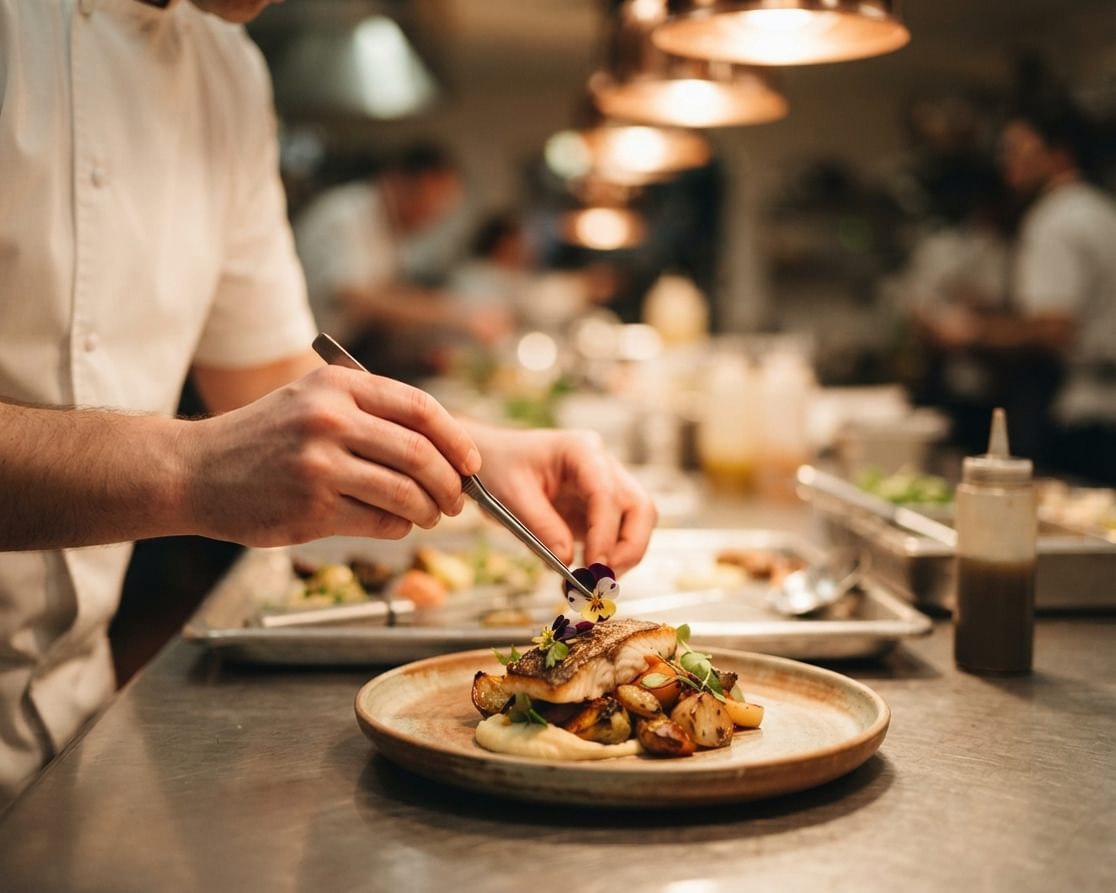
A cook finishing a plate at the pass under a warm service light
Most of what you are asking about was settled long before the room filled up.
  • Does leaving that out change how the dish works?

    This is the generous version of asking for a change, because it invites an honest answer rather than a yes. Sometimes the thing you would rather avoid is a garnish, and sometimes it is the reason the plate holds together at all.

  • Is there something else on the menu that suits this better?

    Handing the choice back often works better than pressing on one line. A kitchen that cannot bend a dish will usually know the dish already on the page that does what you are after, and it costs them nothing to point at it.

  • How much of this is decided before service starts?

    Plenty of dishes are marinated, part cooked or portioned hours ahead of the doors opening. Knowing that turns a no into something you can understand, rather than something that sounds like an unwillingness to help.

If you only say one thing, say the thing that matters most to you. Naming a single ingredient to leave out, or one texture you would rather not meet, gives the kitchen something workable in the seconds it has. A long list turns ordering into a negotiation, and the answer to a negotiation in the middle of service is nearly always no.

Carry it to the next menu

Let each answer teach you how to read the next menu faster

Every answer you are given is a key to a word you will meet again on somebody else's page.

Ask in one room what a section heading actually covers, and you will recognise that heading somewhere else weeks later without asking twice. The same goes for the small marks in a margin, the shorthand a kitchen uses for its own portions, and the gap between a dish described in three words and one described in fifteen. None of that is written down anywhere for you to study. It gathers, one conversation at a time, until you are reading things off the page that you used to have to ask for.

One question, months of use

Ask once why a menu files a dish under a heading you did not expect, and the reasoning starts turning up on other cards: a kitchen grouping by how it cooks rather than by course, or keeping the plates meant for sharing well away from the rest. The next menu that does the same thing reads in seconds.

That is the quiet promise of asking at all. Do it often enough and you end up asking less, because the printed page has started answering on its own, and the questions you do save up are the ones no menu was ever going to cover.